The world is currently witnessing an unprecedented phenomenon in human mobility. After years of restricted movement and cautious planning, we have entered an era defined by a “huge surge” in global travel. This is not merely a seasonal uptick or a localized trend; it is a fundamental shift in how humanity prioritizes experiences, time, and connectivity. From the bustling terminals of Changi and Heathrow to the remote trails of Patagonia, the message is clear: the world is back on the move, and it is doing so with a fervor never seen before.
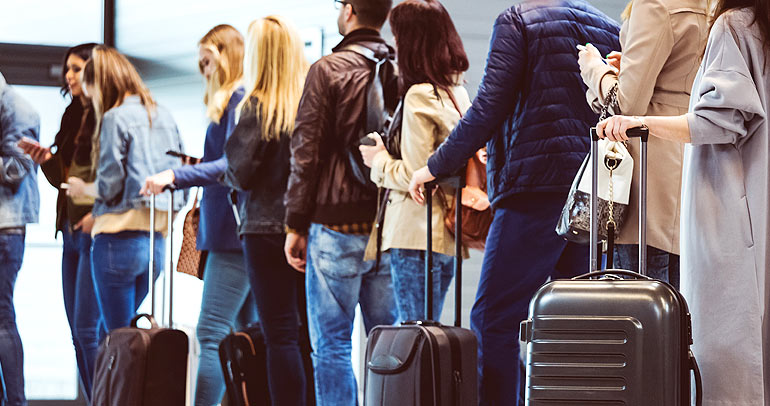
This massive influx of travelers—often referred to as “revenge travel” in its early stages but now matured into a sustained lifestyle shift—has brought about both incredible opportunities and significant challenges for the global hospitality industry. Understanding the drivers behind this surge and learning how to navigate this crowded new landscape is essential for any modern globetrotter.
The Catalysts Behind the Travel Boom
Several factors have converged to create this perfect storm of high demand. Understanding these “why” factors helps explain why the surge shows no signs of slowing down in 2026.
1. The Psychological Shift toward Experiences
There has been a profound change in consumer psychology. People are increasingly moving away from the accumulation of material goods in favor of “experiential wealth.” In a world that feels increasingly digital and ephemeral, the tangible memory of a sunset over the Mediterranean or a cooking class in Kyoto holds more perceived value than a new gadget or luxury item.
2. The Rise of the Digital Nomad and Flexible Work
The decoupling of work from a physical office has been a massive contributor to the travel surge. Millions of professionals now have the freedom to work from anywhere. This has blurred the lines between “business” and “leisure,” creating the “bleisure” traveler. Instead of a two-week annual vacation, many are opting for “workations” that last months, keeping tourist hotspots busy even during traditional off-peak seasons.
3. Increased Accessibility and Emerging Markets
The expansion of middle-class populations in regions like Southeast Asia, India, and Latin America has introduced millions of new travelers to the international market. Combined with the continued growth of low-cost carriers and improved visa-free agreements between nations, international borders have become more porous and accessible than ever before.
The Impact on Destinations: Overtourism and Adaptation
While the surge is a boon for national economies, it has placed immense pressure on the world’s most iconic landmarks. Cities like Venice, Kyoto, and Amsterdam have had to implement innovative strategies to manage the crowds and protect their cultural heritage.
We are seeing a rise in “Tourist Taxes” and reservation-based entry systems for city centers and national parks. These measures are not intended to discourage travel but to ensure a sustainable “carrying capacity.” For the traveler, this means that spontaneity now requires a bit more foresight. Booking entrance tickets to the Louvre or the Alhambra months in advance has become the new standard.
Furthermore, the surge is pushing travelers to seek “The Alternative Path.” As the main hubs become saturated, “Second-City Tourism” is flourishing. Travelers are discovering that Utrecht offers a charm similar to Amsterdam without the overwhelming crowds, or that the beaches of Albania provide a Mediterranean experience comparable to the Greek Isles at a fraction of the cost and congestion.
Navigating the Surge: Strategies for the Modern Traveler
To enjoy travel in this high-demand era, one must adapt their strategy. The old methods of “showing up and seeing what happens” often lead to frustration and inflated costs in 2026.
- Embrace the Shoulder Season: The lines between peak and off-peak are blurring, but the “shoulder seasons” (the periods just before or after the height of summer or winter) remain the sweet spot. You get the benefit of decent weather with significantly shorter queues and more reasonable hotel rates.
- Tech-Driven Efficiency: Utilize the latest travel apps for real-time crowd monitoring. Many major attractions now provide live data on wait times. Additionally, leverage AI-driven itinerary planners that can suggest optimal times to visit popular sites based on historical foot traffic data.
- Prioritize “Slow Travel”: Instead of trying to check five countries off a list in ten days, consider staying in one region for the entire duration. Slow travel reduces the stress of transit—which is where the surge is felt most acutely—and allows for a deeper, more meaningful connection with the local culture.
The Infrastructure Challenge: Airports and Beyond
The surge has tested the limits of global infrastructure. Airports have responded by accelerating the implementation of biometric boarding and automated security screenings to process the record number of passengers. However, the human element—pilots, cabin crew, and ground staff—remains a bottleneck.
For the traveler, this means that “buffer time” is your best friend. Arriving at the airport early and choosing flights with generous layovers is no longer a suggestion; it is a necessity for a stress-free journey. The surge has also revitalized the rail industry, with many travelers choosing high-speed trains over short-haul flights to avoid airport congestion and reduce their carbon footprint.
Conclusion
The huge surge in travel is a testament to the resilient human spirit and our innate desire to explore and connect. It represents a world that is more curious and more integrated than at any other point in history. While the crowds and the costs can be daunting, the opportunity to witness the diversity of our planet remains one of life’s greatest privileges.
By traveling with intention, planning with precision, and maintaining a sense of flexibility, you can navigate this busy era with ease. The surge is not an obstacle to be avoided, but a vibrant energy to be embraced. As we move forward, the goal is to travel “better,” not just “more”—ensuring that our journeys are as sustainable for the destinations as they are enriching for our souls. The world is open, the seats are filled, and the next great adventure is waiting just beyond the horizon.